
Europe’s Abundance Mindset
European robotics marches on, pro-growth policymaking in the EU, and our discussion with David Galbraith.


Hello! This is Kay & Patrick, with the sixth edition of DG Progress, your #1 source for optimism about European tech.
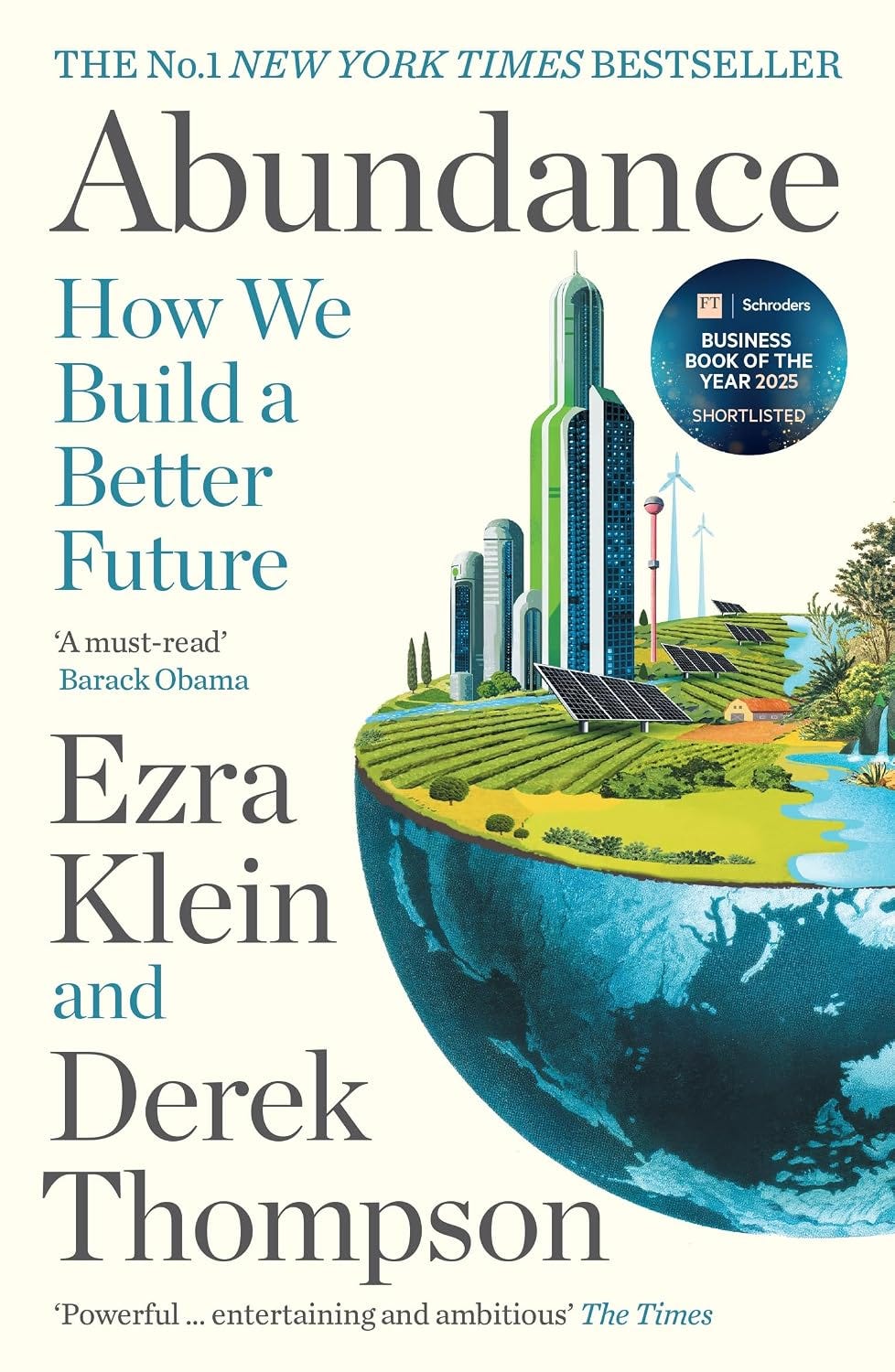
We spent this month thinking about abundance. Our summer book club started with Abundance, by Derek Thompson and Ezra Klein. The core message? Paradoxically, progressive ideas can get in the way of progressive outcomes. This is no more true than with climate policy, where planning restrictions, environmental regulations, and NIMBYism get in the way of building clean energy, carbon-efficient transport infrastructure, and green technologies affordably. Worse, the authors contend, a “degrowth” agenda has emerged as a solution to climate change, which is as unrealistic as it is regressive.
As Europe suffered yet another heatwave, an astonishing stat emerged: a ridiculous number of the most vulnerable Europeans die unnecessarily each year. Why? Because of a failure to install and use air conditioning. Yes, when energy grids were filled with carbon emissions, air conditioning was expensive and inefficient, and temperature was more about comfort than mortality, there could be room for debate. But today, Europe needs air conditioning, and there’s nothing regressive about it. There’s a world of better policies we can embrace on the premise that clean and abundant green energy is around the corner, if we make it so.
The good news? Greener and cheaper energy is on the way. In fact, in many ways, it’s already here, and should lead to a rethink of our policies around energy-intensive industries. Numerous European companies are leading in turning Europe into the greenest energy economy in the world. For example, Munich’s Proxima Fusion just closed a €411 million funding round to further develop a “generational energy technology” and the first fusion power plant. Anti-tech crowds might sniff at the funding from Google; progressives will welcome the boost to Europe’s green energy ambitions. Indeed, we could be going even further, as revealed in this month’s interview with European tech VC David Galbraith.
🏗️ Making Progress
Big month for Big EuroTech as giants make moves. When Europe’s companies are allowed to scale, they soon send support to the rest of the ecosystem.
🇮🇹 See it for yourself. Bending Spoons, an under-the-radar tech conglomerate, went public in a €16 billion listing (one of Europe’s biggest). The empire includes brands such as AOL, Eventbrite, Vimeo, Evernote, and boasts over 500 million active users.
🇩🇪 SAP’d up. SAP acquired Prior Labs, which builds foundation models for business data, just 18 months after its founding.
🇫🇷 Double-decacorn. Swedish firm EQT is set to lead Mistral AI’s new funding round, via the EU-supported Scale Up Europe Fund. The French AI darling may be valued at over €20 billion.
🇸🇪 Prompt injection. Lovable, one of the world’s leading “vibe-coding” companies, is on the cusp of new funding that will push its valuation past €10 billion (decacorn status).
European defence start-ups continue to develop technologies to modernise Europe’s armies and capabilities.
🇫🇮 Looking up. ICEYE, a satellite manufacturer, expects to double its global production by the end of 2027. Its CEO is pushing for Constellation Europe, a system of 1,000 satellites to bolster Europe’s intelligence and tactical capabilities.
🇩🇪 Take off. Money floods into German drone startups. Stark raised €500 million to boost R&D and manufacturing, in a “commitment to Europe’s defence industrial base”, while Quantum Systems raised over €1 billion to scale air, land, and sea drones.
🇬🇧 Pointy end. London-based Kraken, which develops autonomous military boats, became Europe’s newest defence unicorn after raising over €150 million.
“Physical AI” is an emerging field in which cutting-edge software developments are enabling smarter hardware machines (i.e., robots). It’s an area where Europe, with its manufacturing legacy, may be able to lead.
🇫🇷 Enter Le Chat. Mistral AI released Robostral Navigate, a model built for physical navigation.
🇩🇪 Ich-Robot. NEURA Robotics secured over €1 billion in funding to scale its physical AI and cognitive robotics platform, while Munich-based Microagi raised $55 million in Germany’s largest-ever seed round to train the next generation of humanoid bots.
🇳🇴 Getting a grip. 1X, the Danish robotics firm, unveiled its latest advanced bionic technology, NEO Hands.
⛽ Policy Pitstop
Marking Draghi’s homework. Think tank Institut Montaigne released a checkup on the Draghi Report’s 567 recommendations. While overall the EU’s “implementation rate” scored 30%, almost half of the measures designed to close Europe’s structural innovation gap have not yet been actioned.
EU Inc negotiations gather pace. The European Parliament published its report and opinions on the EU Inc – the EU’s proposal to create simpler, cheaper, faster EU-wide incorporation laws. Amendments have been handed in to the Parliamentarians leading on the report, and the Council are set to discuss the proposal on 23 July.
Meanwhile, the response to the EU’s consultation on EU Inc closed in June.
The folks behind the EU Inc Petition have highlighted 5 must-haves as the proposal works its way through the legislative process: free choice of registered office for founders, one central EU registry, EU Inc access for all companies, standardised stock options, and labour law and taxes that follow a company’s activity not its registered address. We had an even shorter list of recommendations, which you can read here.
Age Verification for All. The European Commission announced plans to introduce age-based curbs to social media access.
Age-appropriate online environments are a good idea, but the Commission’s desire to rely on ID checking every internet user would be a significant change to the online world, and warrants serious debate.
Mythos momentum. The EU released its AI & Cyber Action Plan to ensure its access and management of frontier AI models, such as Anthropic’s Mythos.
We’re pushing to make sure it doesn’t block startups from accessing the best tools and services from abroad.
Ireland takes over the EU Council’s hotseat. It’s Ireland’s turn to take the Presidency role at the Council of the European Union. Irish diplomats will be responsible for steering critical EU files such as EU Inc and the Digital Omnibus.
We had some thoughts on what they should focus on.
🌉 The Bridge

David Galbraith, a co-creator of RSS and incubated the project that became Yelp, is an architect-turned-VC who has fundamentally shaped the modern web. In this interview, Galbraith discusses how Europe can build critical-mass tech hubs like Silicon Valley, leverage AI to empower lean creative teams, and the importance of rejecting the “degrowth” mindset.
Why has Silicon Valley had so much concentration of success, and can Europe replicate that?
“Ecosystem is everything. The Bay Area has become like Florence during the Renaissance; the internet spawned something transformative, and AI is taking it to a level akin to the Industrial Revolution. Founders often get the credit, but the environment is what’s unique. Networks undergo phase changes when they reach critical mass. You can manufacture serendipity by placing yourself in these ecosystems.
If you look at the UK, London’s King’s Cross has reached critical mass as an ecosystem of global importance.”
What can the UK and Europe learn from each other regarding AI?
“AI is creating a “barbell” opportunity. Large balance sheets (hyperscalers, frontier models, nuclear power) exist on one side, and small, highly creative teams on the other. King’s Cross is an example of a large balance sheet ecosystem.
Meanwhile, small teams can be incredibly creative. AI automates the “craft” of programming, so the people who remain—the architects and those who know how to ask the right questions—are the ones who flourish. I see an opportunity for this in Greece, which has moved past the populist phase some other European nations seem to be stuck in, and is now focused on growth and technological optimism.”
Is the rejection of technology a major concern for Europe?
“Yes. The “degrowth” mindset is essentially book burning; it’s destroying future libraries. Take air conditioning as an example. It’s an emblematic issue for productivity and human well-being, yet it’s often restricted. The confusion between fossil fuel consumption and clean energy consumption is a major hurdle. Europe has clean grids—hydro, nuclear, wind—and should be building massive amounts of data centres. We should be using massive amounts of clean energy to create progress, not limiting consumption.
You want rules that define the end goal (e.g., save the planet) without specifying how to do it. When regulators focus on passing legislation just to say “we were first to regulate,” they aren’t solving the real problem. If you regulate AI out of existence in Europe, you’ll just end up with American or Chinese AI.”
🛣️ Road Ahead
23 July: Deadline for the public consultation on the EU’s guidelines on AI Act high-risk obligation
29 August: Deadline for the public consultation on the EU’s AI Cloud and Development Act
14 September: European Parliament returns to Plenary
16 September: Von der Leyen’s State of the European Union
Ongoing: Negotiations over the EU’s Digital Omnibus package
🪟Window Seat

We hope the good folks over at EU-INC catch a break after a hell of a campaign that brought the 28th regime EU Inc to the topic of the political agenda.